
Civic Life
Contra Costa and Alameda Transit Boards Advance Smart Traffic Signal Priority Along Major Arterials
Coordinated transit signal preemption along San Pablo Avenue and regional corridors cuts commuter delays while improving emergency vehicle response times.
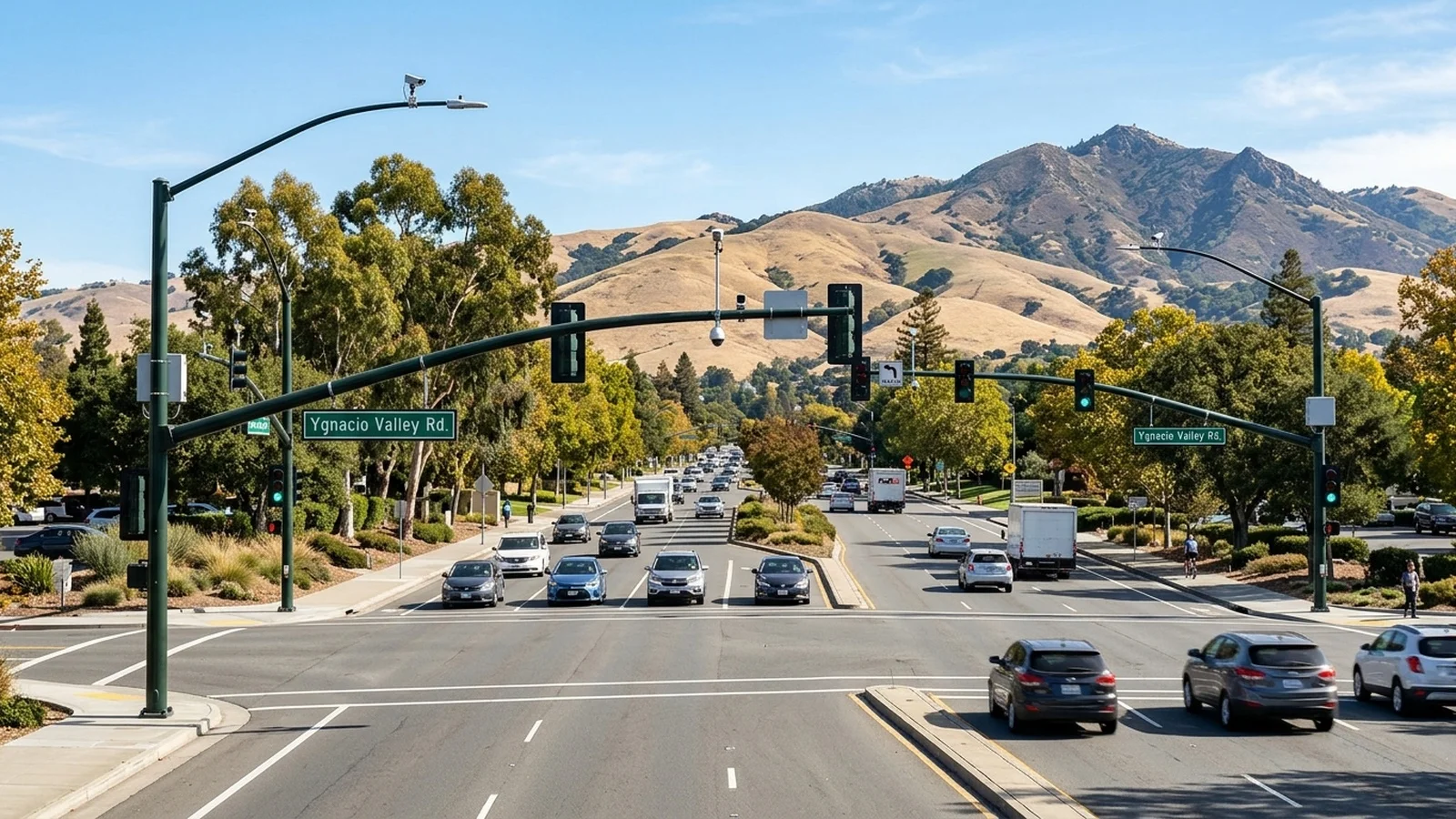
Regional transit directors from AC Transit and the Contra Costa Transportation Authority finalized an inter-agency engineering accord on Friday morning, advancing automated smart traffic signal priority across twenty-eight miles of congested East Bay arterial corridors. The collaborative project deploys connected vehicle optical sensors and cellular vehicle-to-everything (C-V2X) transceivers along San Pablo Avenue, Telegraph Avenue, and International Boulevard, enabling express buses and emergency vehicles to hold green lights and bypass intersection gridlock. Transportation planners unveiled the system architecture during a joint commission meeting in Oakland.
Traffic engineering teams reported that real-world pilot deployments along the San Pablo Avenue corridor delivered a sixteen percent reduction in bus transit travel times during morning peak commute hours. By synchronizing municipal traffic controllers across multiple city boundaries from Richmond through Berkeley to downtown Oakland, the system eliminates erratic bus stop-and-go delays while maintaining predictable traffic cadence for passenger cars. Regional emergency dispatch coordinators affirmed that police cruisers and paramedic ambulances equipped with preemption units experienced a twenty-one percent reduction in critical response transit times.
East Bay bus riders, commuter advocacy groups, and local pedestrian safety coalitions praised the inter-agency collaboration for modernizing public transit without requiring years of disruptive roadway construction. Daily transit passengers emphasized that reliable bus arrival schedules directly support working families navigating multi-modal trips to regional schools and medical centers. Urban business association leaders commended the smart signal deployment, noting that smooth traffic progression reduces idling exhaust emissions and improves air quality along commercial storefronts.
The transit governing boards secured $18.5 million in state active transportation and clean mobility grants to complete roadside hardware installations and central software integrations through late 2027. Municipal public works departments in Oakland, Berkeley, and El Cerrito agreed to share continuous traffic sensor telemetry with regional emergency services dispatch centers. Meeting records show that regional elected officials voted unanimously to establish quarterly performance reviews tracking commuter throughput, schedule adherence, and pedestrian crossing safety.
East Bay commuters and community stakeholders can inspect smart corridor engineering blueprints, signal priority route diagrams, and project milestone timelines online at actransit.org or at transit customer service centers in Oakland. The joint transportation advisory committee will host a virtual public information workshop on Wednesday, November 18, detailing upcoming signal installation schedules. Citizens wishing to provide feedback on specific intersection timings may submit electronic inquiries to the traffic engineering division.
Comments (0)
No comments yet. Be the first to share a thought on this story.