
Technology & AI
OpenAI Forms Independent Mathematics Advisory Group After Model Resolves Over 100 Open Problems
Nine world-renowned mathematicians including Timothy Gowers, Ravi Vakil, and Edward Witten will guide responsible verification and academic collaboration.
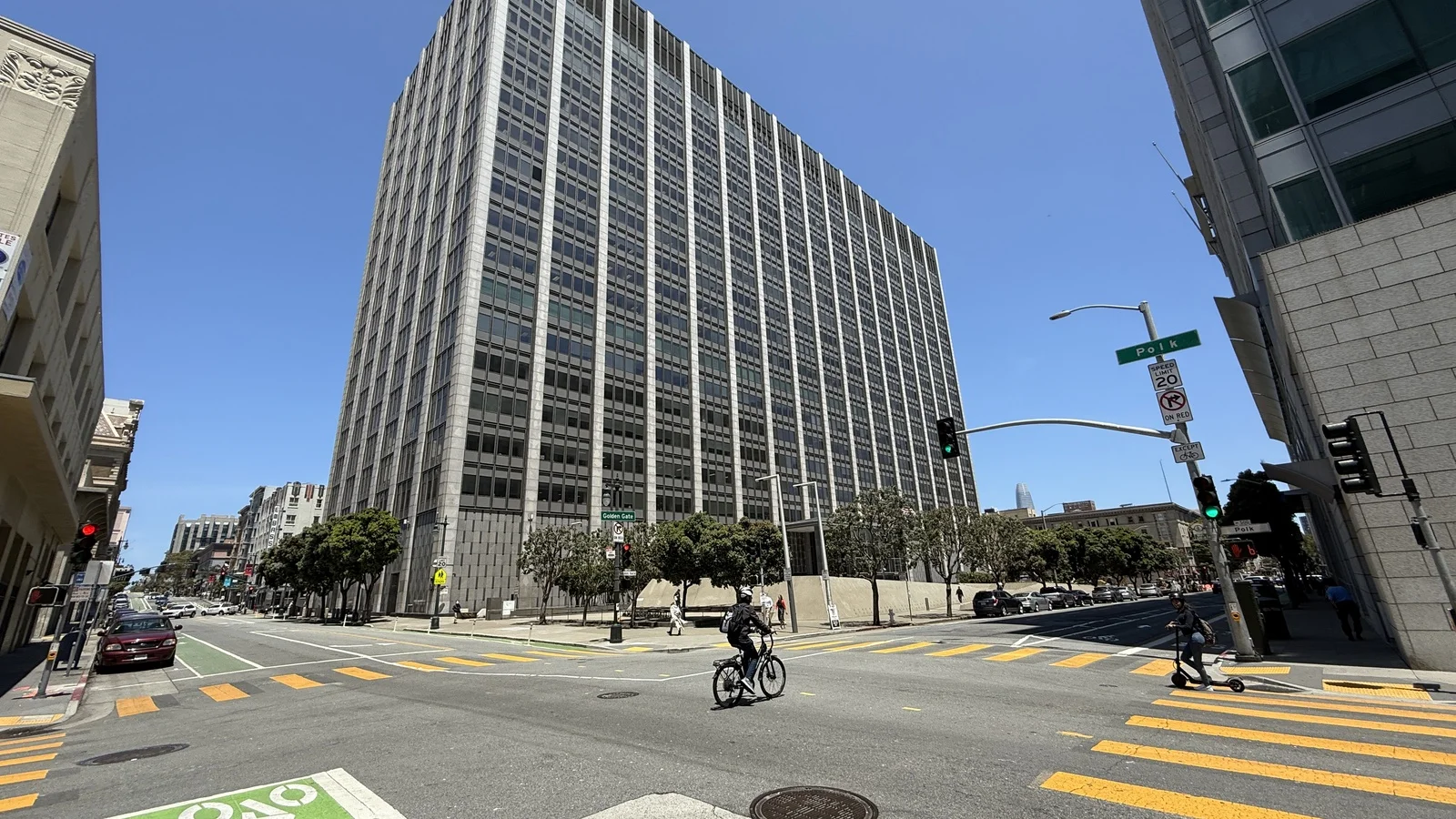
San Francisco artificial intelligence laboratory OpenAI announced on Friday the formation of an independent mathematics advisory group comprising nine internationally acclaimed mathematicians to advise on the responsible development, verification, and academic communication of frontier AI capabilities. The institutional initiative follows rapid breakthroughs achieved by a new internal reasoning model that OpenAI began training on August 28, 2026. In less than two months of specialized compute runs, the internal system successfully resolved the historic Navier–Stokes Millennium Prize problem alongside more than 100 long-standing open problems spanning nearly every major discipline of pure and applied mathematics.
The newly formed advisory committee includes nine distinguished scholars with deep ties to Stanford University, UC Berkeley, Princeton, and European research institutes: François Charles, Camillo De Lellis, Timothy Gowers, Martin Hairer, Nikhil Srivastava, Ulrike Tillmann, Ravi Vakil, Edward Witten, and Melanie Matchett Wood. To preserve strict academic independence and avoid financial conflicts of interest, the panel will operate autonomously from corporate management and its members will receive zero financial compensation from OpenAI. The committee will establish rigorous peer-review protocols for evaluating machine-generated proofs before public announcements are made.
The governance move directly addresses widespread academic debate sparked by a recent open letter signed by university researchers titled "A Severe Misalignment of AI in Mathematics." In that declaration, research mathematicians warned of negative externalities caused by technology companies treating centuries-old open conjectures as competitive leaderboards and marketing benchmarks without consulting the broader scientific community. Faculty members at UC Berkeley and Stanford noted that flooding academic journals with unverified or opaque machine proofs could overwhelm human peer reviewers and disrupt graduate research programs.
By partnering directly with Fields Medalists and leaders of the American Mathematical Society, OpenAI officials aim to transition frontier reasoning models from benchmark competitors into collaborative research instruments for university departments. Nikhil Srivastava of UC Berkeley and Ravi Vakil of Stanford will help coordinate regional workshops in the Bay Area examining how formal proof assistants like Lean can verify complex partial differential equations and algebraic geometry theorems generated by neural networks. The advisory board will also recommend access grants for academic researchers lacking industrial compute clusters.
Mathematicians, computer scientists, and university faculty can review the advisory group's charter, verification standards, and initial Navier–Stokes technical preprints online at openai.com. The independent panel will convene its first formal policy session in San Francisco next month to establish public submission guidelines for automated mathematical discoveries. Inquiries regarding academic research access and formal verification partnerships can be submitted through OpenAI's scientific affairs program office on Third Street.
Comments (0)
No comments yet. Be the first to share a thought on this story.