
Local news
San Jose Hosts Landmark Regional Hearing Establishing Uniform Standards for Data Center Grid Expansion
Municipal planners and regional energy regulators establish mandatory battery buffers, acoustic caps, and utility fees for high-density computational facilities.
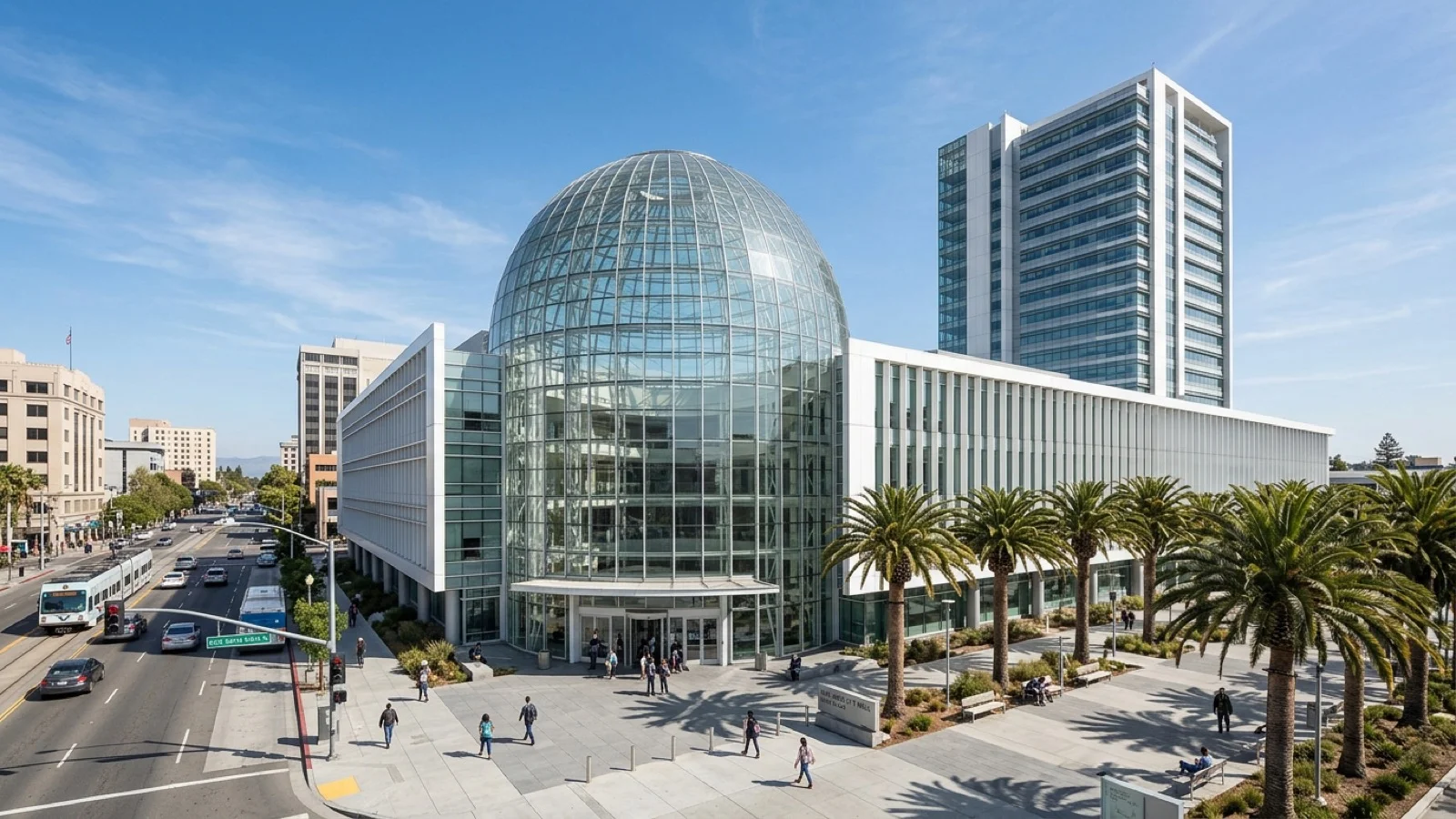
Municipal planners, clean energy regulators, and industrial technology developers convened at San Jose City Hall on Wednesday for the final large-format public hearing establishing uniform zoning, electrical load thresholds, and acoustic standards for commercial artificial intelligence data center developments. The comprehensive regulatory framework establishes clear environmental criteria for enterprise computing facilities as computational demand surges across the South Bay and East Bay tech corridors. City officials emphasized that uniform guidelines are essential to balance cutting-edge digital infrastructure investment with community environmental health and local power grid resilience.
The proposed municipal framework mandates that future high-density data facilities consuming more than 20 megawatts of continuous utility power must incorporate dedicated on-site battery storage capable of four hours of islanded emergency operation during peak grid alerts. Facilities must also demonstrate zero net reliance on backup diesel generators during non-emergency maintenance cycles and maintain exterior acoustic buffers below 50 decibels at adjacent parcel boundaries. Additionally, applicants must contribute $1.85 per gross square foot into a dedicated municipal utility fund for neighborhood distribution hardening and substation modernization.
Silicon Valley industrial property owners and clean tech organizations engaged in vigorous discussions regarding capital investment timelines, noting that clear predictability in permitting accelerates clean energy transitions. Neighborhood residential associations from North San Jose and surrounding valley communities welcomed the enforceable acoustic ceilings and water conservation standards, pointing out that earlier computational facilities generated persistent cooling fan resonance and consumed substantial municipal cooling water reserves. The compromise standards require closed-loop cooling architectures that eliminate evaporative potable water consumption across all newly constructed server halls.
The San Jose Planning Commission and Silicon Valley Clean Energy formulated the uniform standards in close partnership with Pacific Gas and Electric transmission engineers and regional air quality regulators. By establishing proactive thresholds prior to individual project filings, the city aims to prevent piecemeal zoning variances while providing technology operators with transparent engineering roadmaps. Regional planners noted that the standards are already serving as a template for neighboring East Bay industrial submarkets evaluating similar computational cluster proposals.
The draft ordinance heads to the San Jose Planning Commission on October 28 for formal environmental certification and statutory recommendation, followed by final City Council deliberations scheduled for November 10. Once certified, the uniform data center development standards will take effect across all industrial zones beginning January 1, 2027, establishing an orderly roadmap for the next generation of regional computational infrastructure.
Comments (0)
No comments yet. Be the first to share a thought on this story.